

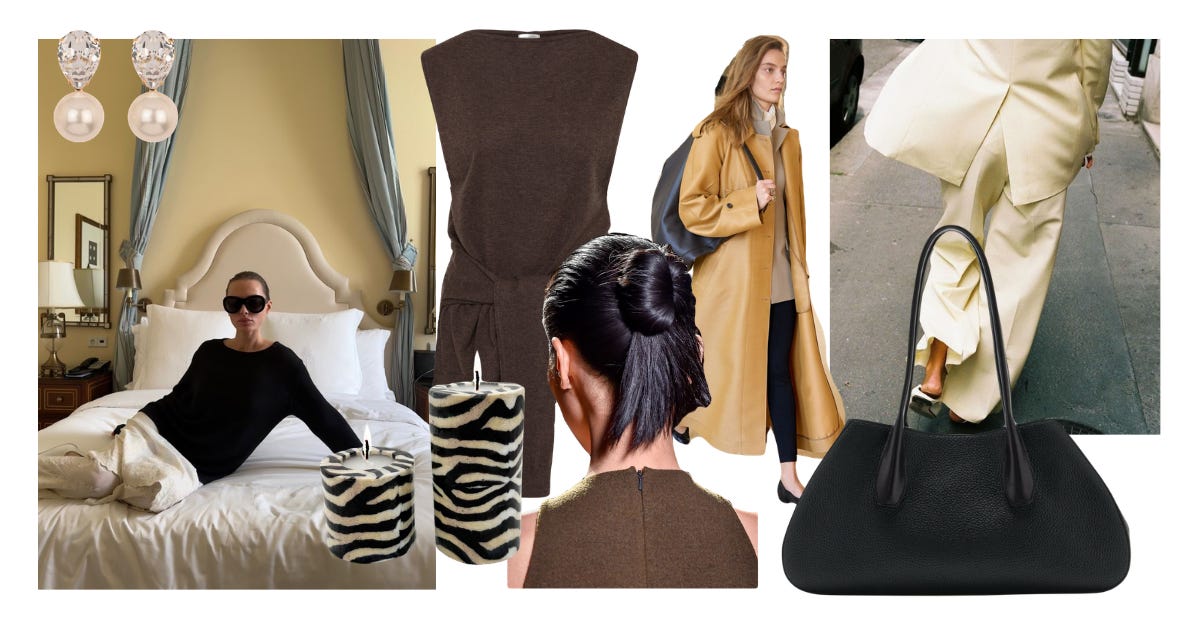
Okay so. I had a moment a while back - deep in my Pinterest board, deep in some influencer’s “get ready with me,” deep enough that I lost track of whose feed I was even in anymore - where I realized I’d seen the exact same six brands recommended to me for the third time that week. Not similar brands. The SAME brands. Every “hidden gem” everyone kept discovering had started to look like a group project everyone else was also doing, and I hadn’t even noticed it happening, because it happens one algorithm-approved recommendation at a time.
That’s the actual origin of this, if I’m honest, more than any sustainability epiphany. I got bored of my own closet in a way that felt specific - not “I need more clothes,” but “I need different information,” because the items that actually become those forever pieces aren’t coming from the brands with the biggest marketing budget. They are coming from the two-person label some stylist found on a research trip, worn by the people who actually have taste rather than the people who have reach. You know the ones. You see them on someone in Peckham eight months before they show up in your feed, at which point, some cosmic law dictates, they immediately stop being interesting.
Here's the catch though - if the whole plan is to keep buying more clothes, I also wanted them to be ethically made. A tiny label can be genuinely doing the work -real factory relationships, real transparency, the whole thing - or it can just be very good at looking like it is, because nobody's ever had a reason to double-check a brand with 4 000 followers. Big brands get scrutinized constantly, for better or worse. Small ones mostly get a pass, purely because nobody's looking. That felt like an actual gap, not a vibe, so I did something about it, which, if you know me, is a slightly alarming amount of follow-through for someone whose track record on follow-through is "average, generously."
So I started making a list - a proper, obsessive list. Which brands say where things are made, specifically, versus which ones say “ethically produced” like that’s a location. Which small labels are quietly doing something excellent that literally no one is covering, because they don’t have someone’s assistant cold-emailing every editor within a three-mile radius. It started as a note in my phone. Then it was a spreadsheet I was weirdly proud of. Then it became this - Keeper.
What it is, concretely: a running, growing list of brands - small, big, everything in between, because the comparison is the whole point. Each brand is graded A through F across materials, labour, environmental practice, transparency and animal welfare (where relevant). Not a paragraph about a brand’s “journey.” An actual grade, built off actual published evidence.
The part I’m most annoyingly proud of: small brands don’t get graded on the same curve as brands with an actual compliance department. A two-person label is never going to produce the same paper trail as a company with nine figures in revenue behind it, and pretending otherwise just quietly hands the win to whoever’s biggest, which is the exact opposite of the point. So the categories that basically require a corporate infrastructure to satisfy just get set aside for small labels entirely, instead of counting against them like some mysterious red flag. Nobody gets punished here for being under the radar. They just get asked what’s actually fair to ask, at the size they actually are.
Which means the two things this is doing are really just one thing: it’s how you find the brand nobody’s told you about yet, and it’s how you check, in about the time it takes to read one screen, whether that brand is the real thing or just really good marketing dressed up as it. I like it best when both are true at once. A two-person label with a genuinely solid factory relationship, sitting right next to some very famous name that talks a much better game and can back up roughly none of it, that comparison is, honestly, the entire reason I kept doing this well past the point it stopped being reasonable.
None of this is trying to be your personality. It’s not homework, and it’s definitely not trying to make you feel bad about anything currently hanging in your closet. It’s just meant to save you the two hours of digging I was already doing for myself anyway, so you get to skip straight to the actually fun part - finding the thing nobody else has yet, and knowing, once you’ve found it, that it’s actually worth the closet space.
If you want to poke around yourself, it’s public. And I’ll say this honestly, because pretending otherwise would undercut the whole point of a project about not overselling things - it’s a work in progress. New brands will be going up all the time, but there’s a high chance the one you’re already wearing, or the one you just found on Instagram, isn’t on there yet. If that happens, tell me. There’s a box under Brands on the site for exactly this — drop the name in and I’ll actually do the digging, factories, labour policy, the whole checklist and get it graded and added. That’s genuinely the fastest way this gets better!